CKO Bayonne
8 Benefits of Heavy Bag Workouts That Build Real Power
Last Updated: October 30, 2026
Quick Summary
Heavy bag workouts build cardiovascular endurance and anaerobic capacity, functional strength and punching power through the kinetic chain, lean muscle, stress relief, calorie burn, core engagement, and hand-eye coordination. Most people should train 30 to 45 minutes in three-minute rounds with one-minute rest periods. Beginners do well with 20 to 30 minutes, two to three times per week.
- Heavy bag work trains aerobic capacity and anaerobic conditioning at once, which few gym activities do.
- Punching power travels from feet through legs, hips, torso, and shoulders into the fist.
- Beginners should throw at half speed and wrap hands every time, even for light rounds.
- Experienced trainees can extend sessions to 60 minutes before form usually breaks down.
- Keep your wrist straight at impact and land with the first two knuckles to prevent sprains.
Table of Contents
- Why Heavy Bag Workouts Beat the Treadmill for Full-Body Conditioning
- Heavy Bag Workouts Build Cardiovascular Endurance and Anaerobic Capacity
- Punching Power, Lean Muscle, and the Kinetic Chain
- Stress Relief, Mental Clarity, and the Flow State
- Calorie Burn, Core Engagement, and Hand-Eye Coordination
- A Heavy Bag Workout for Beginners: Start Here
- How Long Should a Heavy Bag Workout Be?
- Proper Punching Technique for Heavy Bags: Protect Your Joints
- Frequently Asked Questions
Why Heavy Bag Workouts Beat the Treadmill for Full-Body Conditioning
A treadmill asks one thing of you: keep moving forward. A heavy bag asks for everything at once. That difference is the entire case for heavy bag workouts, and it's why we built our studio floor around real bags rather than rows of machines. When you throw a punch, your legs drive, your hips rotate, your core braces, and your shoulders deliver the force. One movement, the whole body working in sequence.
The treadmill isn't useless. It's just narrow. Walking or running builds aerobic capacity and little else, because the movement pattern never changes. Bag work combines cardiovascular endurance with muscular strength and power, stress relief, and coordination in a single session.
Want the full-body version of a cardio session? See our group fitness classes and compare what a class actually involves.
Heavy Bag Workouts Build Cardiovascular Endurance and Anaerobic Capacity
Heavy bag work trains two energy systems at once. Steady rounds build aerobic capacity, the engine that keeps you going. Short, hard bursts of punches train anaerobic conditioning, the system that fuels explosive effort. Few gym activities hit both.
The rhythm matters more than most people expect. A round isn't a sprint or a jog; it's a series of sharp efforts with brief recoveries, repeated until the bell. That pattern raises your heart rate and keeps it there, which is why a bag session feels harder than its duration suggests.
A study indexed by PubMed on pad- and bag-based boxing routines found pad work placed greater physiological demand on participants, while bag work was less mechanically demanding. Translation: the bag lets you push your heart and lungs hard without the same joint toll, which matters if you're training several times a week.
Punching Power, Lean Muscle, and the Kinetic Chain
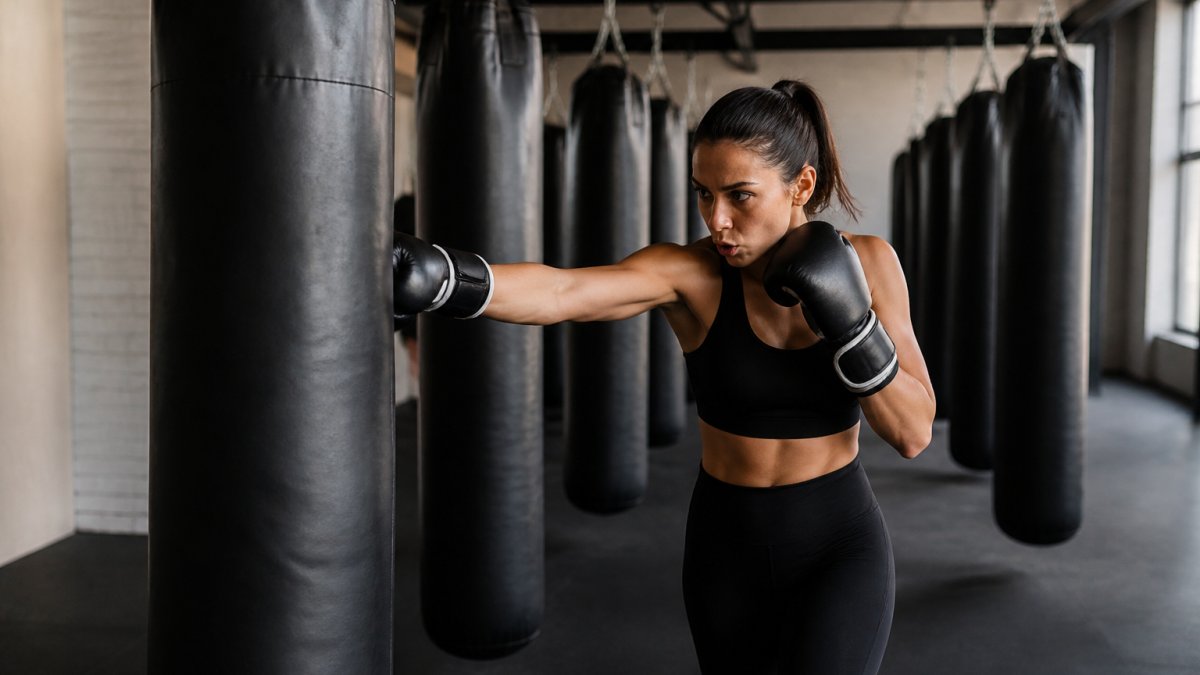
Real punching power starts at the floor. The kinetic chain is the sequence of force traveling from your feet through your legs, hips, torso, and shoulder girdle into your fist. Skip a link and the punch lands weak.
Bag work teaches that sequence better than almost anything else, because the bag talks back. Hit it with arm strength alone and it barely moves. Drive from the ground up and it swings. That feedback loop builds functional strength and explosive power, and it recruits muscle through the hips and core rather than isolating the arms.
You won't build bodybuilder-style muscular hypertrophy from bag work alone. What you will build is lean muscle mass and rotational force that carries into daily life, from lifting groceries to catching yourself on a stair.
Stress Relief, Mental Clarity, and the Flow State
Hitting something can be deeply satisfying. A hard round on the bag can release tension that a slow jog may not.
There's a psychological layer too. When a combination is coming at you and you have to answer it, your brain has no room left for the email you didn't send. Many people find that fully absorbing physical work leaves them feeling clearer afterward. Member Stories shares real people's results and experiences.
Calorie Burn, Core Engagement, and Hand-Eye Coordination
Bag work burns calories because it is demanding. Interval-style rounds with short rest periods keep your heart rate elevated between efforts, and the combination of upper-body conditioning, leg drive, and constant movement adds up to meaningful caloric expenditure. Individual burn varies with body size, intensity, and rest discipline.
Core engagement deserves its own mention. Every punch requires your trunk to brace and rotate, so your abs and obliques work continuously without a single crunch. The jab teaches anti-rotation, your core resists the urge to spin. The cross and hook teach rotation, your core drives the movement.
Add rhythmic striking and you are training hand-eye coordination, reflexes, and proprioception with every combination. The coordination gains surprise people.
Use this progression framework to scale the work:
| Level | Focus | Drill | Rounds |
|---|---|---|---|
| Beginner | Stance, guard, straight punches | Jab-cross only, half speed | 3 x 2 min |
| Intermediate | Combinations and footwork | Jab-cross-hook, step-in step-out | 4 x 3 min |
| Advanced | Power and pace | 1-2-3-2 with pivot, 30-sec sprints | 5 x 3 min |
Quality beats duration every time. A focused 30-minute session with clean technique does more for you than an hour of sloppy, tired punching.
A Heavy Bag Workout for Beginners: Start Here
Never thrown a punch? That's a fine place to start. Beginners have no habits to unlearn. Here is a progression framework you can follow over your first eight weeks.
Weeks 1-2: Stance and straight punches. Start with stance and guard before you add power. Learn the jab, then the cross. Throw at half speed until the movement feels natural, and let the bag absorb the punch rather than pushing through it. Three or four rounds of basic combinations is plenty for a first session. Wrap your hands every time, even for light rounds, and wear bag gloves rather than bare knuckles.
Weeks 3-4: Add the hook and footwork. Introduce the lead hook at half power. Practice stepping in with the jab and stepping out after the cross. Keep rounds to two minutes with one minute rest. The most common beginner mistake is swinging for the fences on day one. Power comes from technique, and technique comes from repetition.
Weeks 5-8: Combinations and pace. Chain jab-cross-hook into a single flow. Add a pivot after the hook to simulate an angle change. Extend rounds to three minutes. If your wrist or shoulder feels sore, drop back a week, joint health is the limiting factor for most beginners, not cardio.
Injury prevention starts before your first punch. A misaligned wrist meeting a heavy bag is the fastest route to a sprain. Keep your fist tight, your knuckles lined up with your forearm, and your wrist straight at impact. Rotate your hips into the punch instead of muscling it with your shoulder, which protects the shoulder girdle over the long run. Land with the first two knuckles, exhale on impact, and keep your chin down behind your guard. Throwing full-power hooks before your technique is set is the most common way beginners hurt a shoulder or wrist. Build impact resistance gradually.
Ready to try it with a coach watching your form? Find a CKO Kickboxing Location Near You and book your free trial class today. Book Free Class and see what a session feels like.
How Long Should a Heavy Bag Workout Be?
A heavy bag workout should run 30 to 45 minutes for most people, structured as three-minute rounds with one-minute rest periods. Beginners do well with 20 to 30 minutes. Experienced trainees can extend to 60 minutes, but past that point form usually breaks down before your cardio does.
| Experience Level | Session Length | Round Structure | Frequency |
|---|---|---|---|
| Beginner | 20-30 min | 2 min work, 1 min rest | 2-3x per week |
| Intermediate | 30-45 min | 3 min work, 1 min rest | 3-4x per week |
| Advanced | 45-60 min | 3 min work, 30-60 sec rest | 4-5x per week |
Quality beats duration every time. A focused 30-minute session with clean technique does more for you than an hour of sloppy, tired punching. Curious how a structured class fits a busy schedule? Learn about CKO Kickboxing and what our sessions look like.
Proper Punching Technique for Heavy Bags: Protect Your Joints
Injury prevention starts with your wrist. A misaligned wrist meeting a heavy bag is the fastest route to a sprain, so keep your fist tight, your knuckles lined up with your forearm, and your wrist straight at impact.
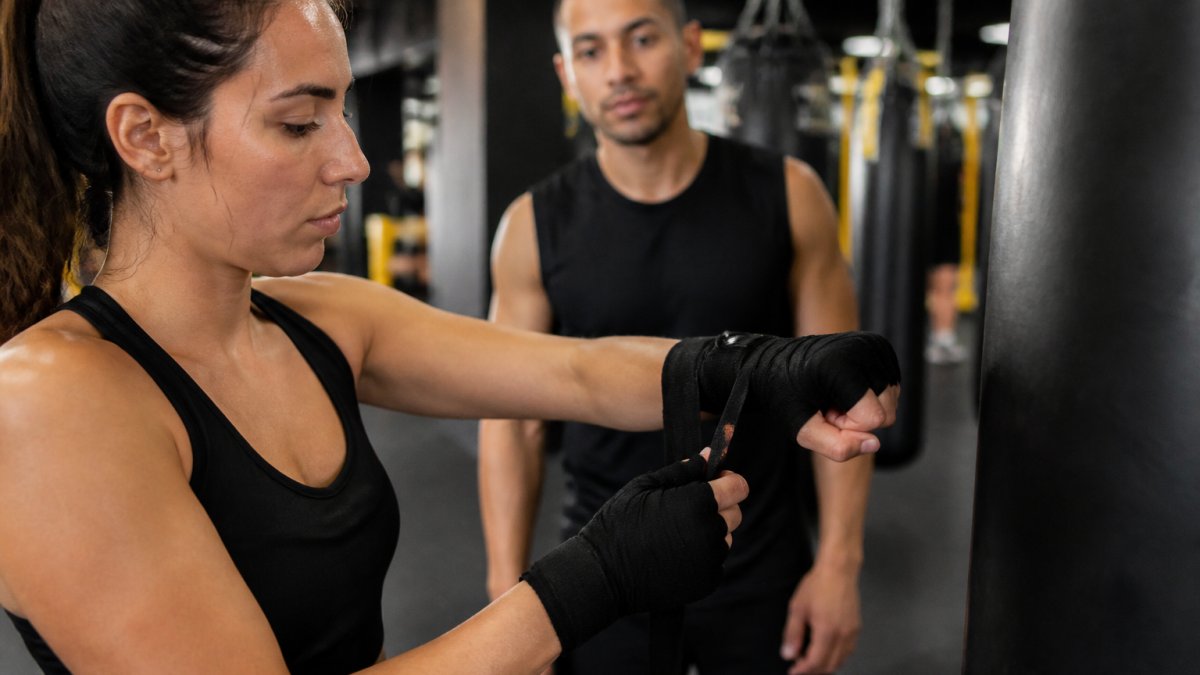
Wrap your hands properly, and never punch with bare knuckles if you're new. Rotate your hips into the punch instead of muscling it with your shoulder, which protects the shoulder girdle and joint stability over the long run. Land with the first two knuckles, exhale on impact, and keep your chin down behind your guard.
Building impact resistance gradually is wise, since throwing full-power hooks before technique is set can strain the shoulder or wrist.
Frequently Asked Questions
What are the benefits of using a punching bag?
Heavy bag workouts train several systems at once. You build cardiovascular endurance and anaerobic capacity through repeated high-intensity rounds, develop punching power and lean muscle through the kinetic chain, and burn calories at a rate that rivals most cardio machines. The rhythmic striking also supports stress reduction and mental clarity, while the constant movement sharpens hand-eye coordination and core engagement.
How many calories can you burn in a 30-minute heavy bag workout?
Calorie burn depends on your body weight, intensity, and how much of each round you spend striking versus recovering. A 30-minute session that mixes hard combinations with short rest periods keeps your heart rate elevated and your metabolic rate up, and the total is typically higher than a steady walk or light jog of the same length. Track your own output with a heart rate monitor rather than relying on a generic number, and focus on consistent effort across rounds.
Is heavy bag training effective for building lean muscle?
Yes, with the right structure. Heavy bag work builds lean muscle mass in the shoulders, arms, back, and core through repeated resistance and rotational force. It is not a substitute for progressive strength training if hypertrophy is your main goal, but the muscular endurance and functional strength you develop carry over to daily life. Add resistance work alongside your bag sessions if you want visible muscle growth.
What are the safety precautions for beginners using a heavy bag?
Wrap your hands and wear bag gloves to protect wrist alignment and knuckles. Start with light punches to learn proper punching technique for heavy bags before adding power. Keep your wrists straight at impact, exhale on each strike, and stop if you feel joint pain rather than pushing through it. Beginners should keep rounds short, rest fully between them, and work with a coach who can correct form early. If you have an existing shoulder, wrist, or back injury, check with a qualified professional before starting.
Heavy bag training rewards consistency, and consistency is easier when someone is correcting your form and the music is loud enough to drown out your excuses. CKO Kickboxing classes use real heavy bags, not air, with energizing music and a supportive community where you move at your own pace. Get started with CKO Kickboxing and turn a tired routine into the workout you actually look forward to.
