CKO Bayonne
Fitness Kickboxing for Stress Relief: How Hitting a Bag Helps
Last Updated: November 14, 2026
Quick Summary
Fitness kickboxing relieves stress by pairing full-body movement with a clear mental target, so your attention stays on the bag instead of the day you just had. Punching a real heavy bag discharges nervous energy and frustration, while coaching, music, and a group setting keep you moving without overthinking.
- A scoping review found preliminary signs that non-contact boxing may help with depression, anxiety, and negative mood.
- A five-week kickboxing study by Ouergui and colleagues in 2014 reported cardiorespiratory fitness gains of 13.2% and 11.2%.
- For stress relief, train at moderate effort two to three times a week, breathing hard but still able to talk.
- On low energy days, cut rounds in half, extend rest to 60 seconds, and keep punches light.
- Stop immediately if you feel sharp joint pain, dizziness, or breathing that will not settle after a rest.
Table of Contents
- Why Fitness Kickboxing for Stress Relief Works
- Exercise for Stress Relief: The Science Behind the Sweat
- Kickboxing Mental Health Benefits: Mood, Focus, and Confidence
- Beginner Kickboxing Workout: How to Start Without Feeling Lost
- At-Home Kickboxing Workout for Stress: No Bag, No Problem
- Safety, Intensity, and Realistic Expectations
- Book Your Free Class and Feel the Difference
- Frequently Asked Questions
Why Fitness Kickboxing for Stress Relief Works
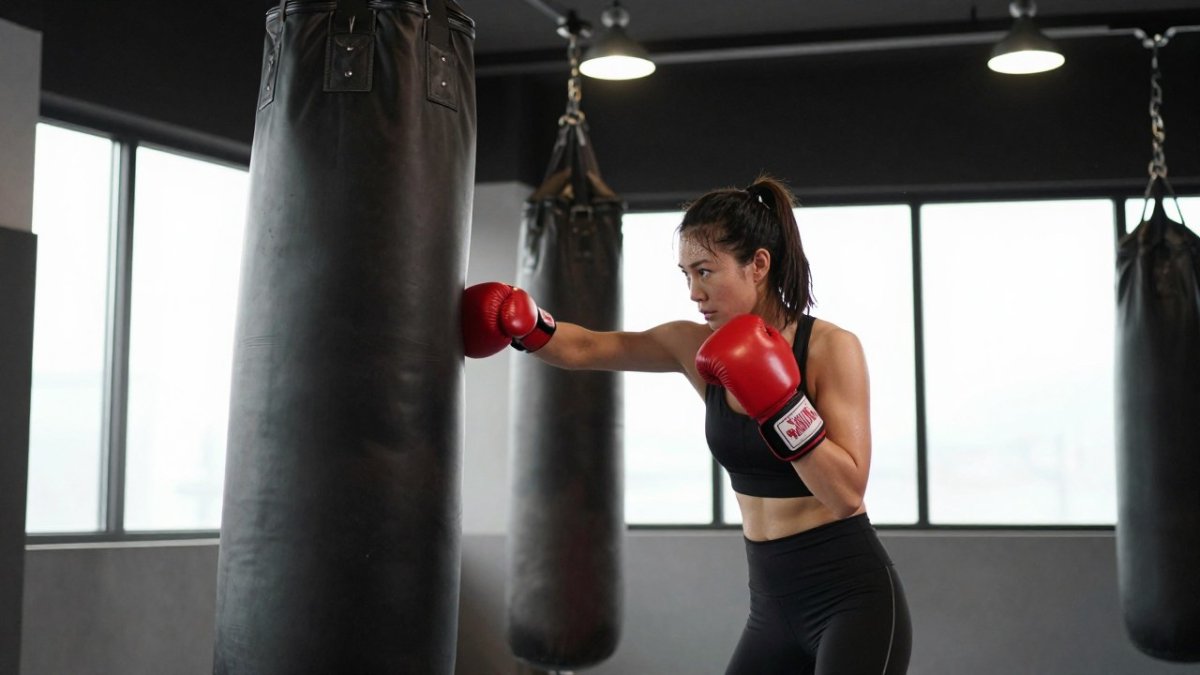
Fitness kickboxing for stress relief works because it pairs full-body movement with a clear mental target. You punch, you move, you breathe hard, and your attention stays on the bag instead of the day you just had. That combination of physical effort and focus is hard to find in a standard gym routine.
Fitness kickboxing can give your body a job and your mind a break. People often walk in tense and leave feeling lighter.
Here is why it lands so well:
- Real heavy bags give you something solid to hit, so the effort feels satisfying
- High-intensity intervals raise your heart rate and burn off nervous energy
- Coaching and music keep you moving without overthinking
- A group setting adds accountability and energy you cannot get solo
The evidence is encouraging but still early. A scoping review on boxing and mental health found preliminary signs that non-contact boxing may help with depression, anxiety, and negative mood. That is not proof that kickboxing treats stress. It does mean the link is worth taking seriously.
If you want a gentler on-ramp, our guide to beginner friendly kickboxing for stress relief walks through how to start without pressure.
Exercise for Stress Relief: The Science Behind the Sweat
Exercise for stress relief works through several body systems at once. Hard physical effort triggers endorphins, the body's feel-good hormones, and it gives your stress response somewhere to go. Movement also helps regulate breathing and releases tension stored in the shoulders, jaw, and hips.
A five-week kickboxing study by Ouergui and colleagues (2014) reported cardiorespiratory fitness gains of 13.2% and 11.2%. That study measured fitness, not stress. Still, better conditioning tends to make daily life feel less taxing.
One catch worth knowing: stress can make exercise harder to start. A review on stress and physical activity found that people new to exercise often move less when stressed, while habitual exercisers move more. The fix is to lower the bar on hard days. Ten minutes counts.
For a practical plan you can follow step by step, see how to relieve stress quickly.
Kickboxing Mental Health Benefits: Mood, Focus, and Confidence
Kickboxing mental health benefits go beyond the calorie burn.
The mood lift comes from a few places. Hard effort releases tension. Learning combinations gives your brain a puzzle to solve. And landing a clean punch feels good.
Cathartic Release and Emotional Outlet
Kickboxing gives you a physical outlet for frustration. Hitting a heavy bag is a safe way to discharge anger and pent-up energy. The bag does not care how hard you hit it.
This is the cathartic release people talk about. It is not about aggression. It is about giving strong feelings a place to go so they stop circling in your head.
Sleep Quality and Mental Reset
Some people find that a hard workout helps them wind down and sleep better, though results vary.
That mental reset matters. When you finish a workout, the problems from earlier often feel smaller. You get a clean break between the workday and the evening.
Beginner Kickboxing Workout: How to Start Without Feeling Lost
The best beginner kickboxing workout is simple, short, and repeatable. You do not need perfect form on day one. You need a plan you will actually follow, with enough detail to know what to do when something feels off.
Here is a safe, repeatable session you can do at home or in a class setting. It uses a 1:1 work-to-rest ratio so you can focus on mechanics without gasping.
- Warm up for five minutes. March in place, do arm circles, and add 30 seconds of easy shadowboxing. Keep it light, you are raising temperature, not training.
- Learn three punches. Jab (lead hand), cross (rear hand), and hook (lead hand). Practice each slowly for 30 seconds. Keep your wrists straight and your thumb on the outside of your fist.
- Add two kicks. A front kick (drive the knee up, extend the lower leg) and a low roundhouse (turn the hip over, strike with the shin, keep the kick below waist height). Do 10 slow reps per leg.
- Work 30 seconds on, 30 seconds off. Do six rounds of light punching on a bag or in the air. Alternate jab-cross and jab-cross-hook. Rest fully between rounds.
- Cool down and stretch. Five minutes of slow walking, shoulder rolls, and hip flexor stretches. (Source: mental health benefits of exercise)
Do this two or three times a week. Add one round per week only when the current routine feels easy and your form stays clean.
A common mistake is going all out on day one. You will be sore and discouraged. Start slower than you think you need to.
Watch out: if your wrists ache during punching, check that your fist is tight at impact and your wrist is straight, hitting with a bent wrist is a common cause of strain.
If you feel unsure about form, our guide on how beginners can start kickboxing safely covers the basics in more detail.
At-Home Kickboxing Workout for Stress: No Bag, No Problem
You can get an effective at-home kickboxing workout for stress without any equipment. Shadowboxing, bodyweight moves, and fast footwork all raise your heart rate. The key is to keep moving and stay focused. Keeping your heart rate up and your attention on each movement can make a simple routine feel purposeful, much like the focused practice found in Schools of Kung Fu.
Try this 20-minute session:
- Warm up: 3 minutes of marching and arm swings
- Round 1: 3 minutes of shadowboxing, mixing jabs and crosses
- Round 2: 3 minutes of front kicks and squats
- Round 3: 3 minutes of fast punches with a step forward and back
- Round 4: 3 minutes of alternating knees and hooks
- Cool down: 5 minutes of slow movement and stretching
Rest 30 seconds between rounds. If you have a bag, swap the shadowboxing for bag work.
For a full routine you can follow along with, see our 30-minute full body kickboxing workout.
Safety, Intensity, and Realistic Expectations
Safety comes first, and realistic expectations come second. Kickboxing is a workout, not a cure. It can help you feel better and manage stress, but it will not replace medical care if you are struggling.
Most beginners assume harder is better. For stress relief, that is often wrong. A hard session can feel cathartic, but if you are already depleted, a very hard workout can leave you more wired, not less. The practical skill is matching intensity to your current state.
Use this simple intensity guide:
| Your Goal | Effort Level | How It Should Feel | How Often |
|---|---|---|---|
| Stress relief | Moderate | Breathing hard, can still talk | 2-3 times a week |
| Fitness gains | Moderate to hard | Breathing hard, short sentences | 3-4 times a week |
| Weight loss | Mix of both | Hard intervals, easy recovery | 3-5 times a week |
| Active recovery | Easy | Comfortable, steady movement | As needed |
How to adapt a session:
- Low energy day: cut rounds in half, extend rest to 60 seconds, and keep punches light. Ten minutes still counts.
- High stress day: choose moderate effort over all-out. A long, steady shadowboxing round can settle your breathing better than a max-effort burst.
- Sore joints: skip kicks and focus on punches, or switch to shadowboxing with no impact.
- New to exercise: start with two sessions a week and add one round per week only when you recover well.
A few ground rules:
- Learn the basics first. Good form protects your wrists, knees, and back.
- Warm up every time. Cold muscles tear.
- Scale the intensity. Move at your own pace, especially when starting.
- Check with a doctor if you have a heart condition, joint problems, or you are pregnant.
Watch out: stop immediately if you feel sharp joint pain, dizziness, or your breathing will not settle after a rest, pushing through those signals is the fastest way to an injury.
You can also track how you feel after each session. Note your mood, sleep, and energy for a few weeks. That personal data tells you more than any general claim.
Book Your Free Class and Feel the Difference
Stress builds up quietly. A workout that gives it somewhere to go can change your whole week. You do not need experience, and you do not need to be in shape to start.
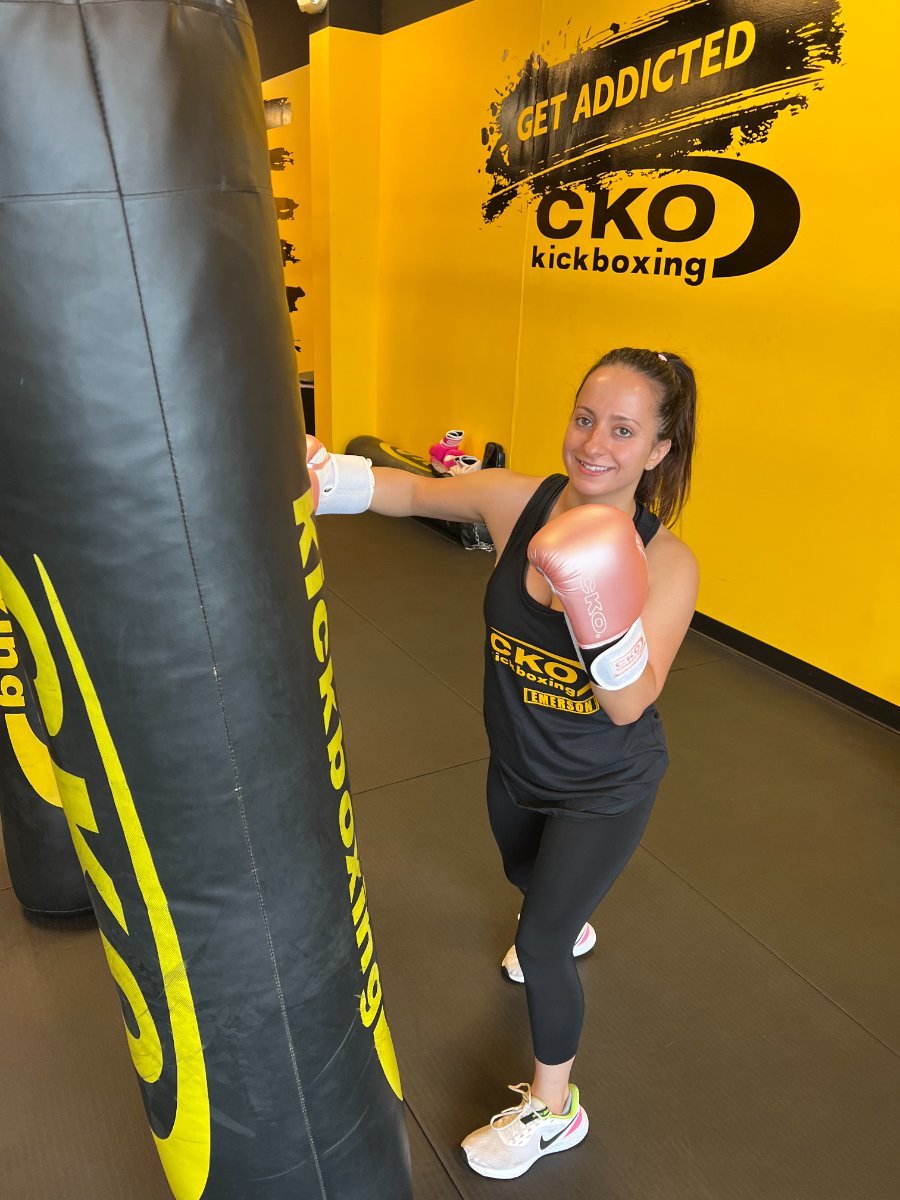
At CKO Kickboxing, our classes feature real heavy bags, motivating music, and a supportive community. You move at your own pace.
Ready to see for yourself? Book a free class at our Bayonne studio and get a feel for the workout before you commit to anything. Check our website for current pricing and class times.
Your first class is the hardest one to book. After that, it becomes the part of your day you look forward to. Get started with CKO Kickboxing and give stress a place to go.
Frequently Asked Questions
Can fitness kickboxing help you manage stress?
Fitness kickboxing combines high-intensity exercise with a physical outlet for frustration. Early research suggests non-contact boxing may be associated with better mood, though the evidence is still preliminary. The real-world benefit comes from the combination of cardiovascular work, endorphin release, and the focus required to learn technique. Many people find the heavy bag provides a satisfying cathartic release that walking on a treadmill does not. Start at your own pace and notice how you feel after a few sessions.
Is kickboxing suitable for beginners who want stress relief?
Yes. A beginner kickboxing workout typically starts with basic stance, footwork, and simple punches before adding kicks. Good studios offer modifications for every movement and let you work at your own pace. If you are new to exercise, focus on learning form first and keep intensity moderate for the first two weeks.
What are the downsides of kickboxing?
The main downsides are injury risk from poor technique or overtraining, and the learning curve for coordination. Stress can also make it harder for beginners to stick with exercise, Soreness and fatigue are common in the first week. Choosing a class with real heavy bags and attentive coaching reduces technique errors. If you have joint issues or injuries, check with a healthcare professional before starting.
How can I use a kickboxing workout to unwind after a stressful day?
Try a 20-minute at-home kickboxing workout for stress: three rounds of shadowboxing (jab, cross, hook, front kick) for two minutes each, with one minute of breathing between rounds. Focus on exhaling sharply with each punch to release tension. At a studio, a full class adds the cathartic release of hitting a real heavy bag and the mental reset of following combinations. Finish with slow breathing and a short stretch. The goal is to leave feeling drained but clear-headed, not exhausted.
