CKO Bayonne
How to Find Fitness Classes With Real Heavy Bags
Last Updated: November 8, 2026
Quick Summary
To find fitness classes with real heavy bags, ask one direct question before signing up: are the bags filled and hanging, or air-filled? Then press the bag at chest height, check it reaches chest or head height, and confirm the fill is shredded material or sand. Solid bags stay still when hit hard.
- Press the bag with one hand; it should barely dent and compress no more than an inch or two.
- Full-size bags reach chest or head height for most adults.
- Ask how many bags per class and whether students share.
- A ratio near one coach to twelve or fewer students means you get form corrections.
- Eat light an hour or two before class, since a heavy meal and bag rounds do not mix.
Table of Contents
- Why Real Heavy Bags Change the Workout
- How to Verify a Class Uses Real, Full-Size Heavy Bags
- A Location-Independent Method for Finding and Comparing Classes
- Fitness Classes With Real Heavy Bags for Beginners
- The Heavy Bag Workout for Strength and Cardio
- What to Bring and How to Prepare for Your First Heavy Bag Workout
- Book Your Free Class at CKO Kickboxing
- Frequently Asked Questions
Why Real Heavy Bags Change the Workout
A heavy bag changes what a workout asks of your body. According to a study on physical response to pad- and bag-based boxing, bag work is more mechanically demanding than pad work, while pad rounds push the heart and lungs harder. In plain terms: the bag makes you move weight, not just air.
That distinction matters when you shop for fitness classes with real heavy bags. A filled bag resists your punch. Your hips, core, and shoulders have to drive through it. Air bags and light freestanding units swing away and absorb almost nothing.
At CKO Kickboxing, the studio features real heavy bags, not air-filled units, so every punch lands against real resistance.
How to Verify a Class Uses Real, Full-Size Heavy Bags
Ask one direct question before you sign up: "Are the bags filled and hanging, or air-filled?" A real bag is heavy, firm, and roughly the height of the person punching it. An air bag gives under light pressure and moves like a balloon.
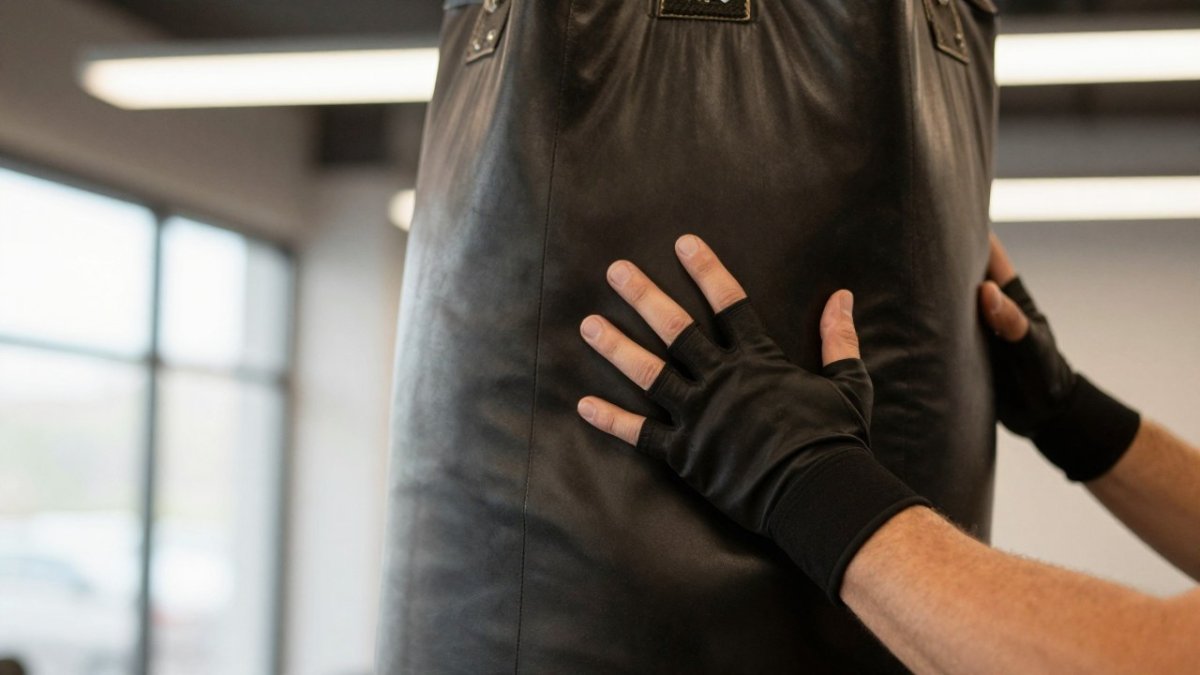
Know the equipment specs before you walk in
A genuine heavy bag is defined by its weight and fill, not by the label on a studio's website. Ask what the bags weigh and what they are filled with.
The five-minute studio check
Use this checklist on a tour or trial visit:
- Press the bag with one hand at chest height. It should barely dent and should not compress more than an inch or two.
- Check the size. Full-size bags reach chest or head height for most adults.
- Look at the fill. Real bags are packed with shredded material or sand; ask what is inside if the shell is opaque.
- Watch a round. Solid bags stay still when hit hard; a bag that swings wildly on every jab is too light.
- Count the bags against the class size. Enough bags means no long waits between rounds.
- Check the mounting. Chains, straps, and a steel frame signal a bag rated for repeated hard contact.
Questions to ask the coach or front desk
A studio page that promises real heavy bags gives you something concrete to check. For example, our Hollywood studio page states it plainly, so you can compare that claim against what you see in person. Before booking, ask: How much do the bags weigh? Are they hanging or freestanding? How many bags per class, and do students share? Are gloves and wraps provided or required?
Watch out: a studio that calls foam-filled or air-filled units "heavy bags" is using the term loosely, and the round will feel like shadowboxing with resistance. If the bags sway like punching balloons, keep looking.
Use this checklist on a tour or trial visit to confirm the bags are real and full-size.
| Check | What to look for |
|---|---|
| Press the bag | Barely dents, compresses no more than an inch or two |
| Check the size | Full-size bags reach chest or head height |
| Look at the fill | Shredded material or sand; ask what is inside |
| Watch a round | Solid bags stay still when hit hard |
| Count the bags | Enough bags means no long waits between rounds |
| Check the mounting | Chains, straps, and a steel frame |
A Location-Independent Method for Finding and Comparing Classes
You can find good bag classes anywhere with a simple process. Search your area, then screen each studio against four criteria before you spend a dollar.
- Confirm the studio uses filled heavy bags, not air bags.
- Ask about class length and how many bag rounds you get.
- Check whether a coach leads the rounds or a video does.
- Ask about a trial class or free first session.
Then compare on three points: coaching, bag access, and schedule fit. A class with ten bags and forty people means shared rounds. A class with a coach who corrects your form beats one that just plays music.
To apply this method near you, use our studio locator and check each location's class details before booking. The same criteria work in any city.
Fitness Classes With Real Heavy Bags for Beginners
Beginners do not need experience to start bag work. A good class teaches the jab, the cross, and the stance in the first session, then builds combinations from there. What separates a beginner-friendly bag class from a punishing one is not the punches, it is the equipment fit, the coaching ratio, and whether the format lets you scale intensity. Because equipment fit, coaching, and intensity also shape how a workout feels, GET FIT BLOG POSTS can help frame those choices alongside other class formats.
Match the class format to your experience and goal
Bag classes come in three rough formats, and each suits a different beginner:
- Technique-first classes spend the first ten to fifteen minutes on stance, guard, and single punches before any hard rounds. Best if you have never thrown a punch.
- Circuit or interval classes alternate bag rounds with bodyweight stations like squats, push-ups, and lunges. Best if you want strength and cardio together and are comfortable moving between stations.
- Cardio-boxing classes prioritize continuous movement and music over technical correction. Best if your goal is conditioning and you are not chasing form.
Ask how many students per coach. A ratio near one coach to twelve or fewer students means you will get form corrections in your first class; a packed room with one instructor often means you copy what you see.
What your first class should cover
Expect your first class to cover:
- Stance and guard: feet set, hands up, chin down
- The jab: a fast lead-hand punch for range and rhythm
- The cross: a rear-hand punch driven by hip rotation
- Breathing control: exhale on each punch, stay relaxed between
- Shadowboxing: practice the motion before you hit the bag
A common mistake is swinging with the arms only. Power starts in the legs and hips. Coaches watch for this and correct it early.
Equipment fit and hand safety
Ask whether gloves and hand wraps are provided before you arrive. Gloves should be snug with your wrapped hand inside, so your knuckles do not move on impact.
Watch out: punching with a bent or floppy wrist is the most common cause of soreness after a first class. Keep the wrist straight on impact, never punch with a locked elbow, and stop if you feel sharp joint pain. Sore muscles are normal; sharp pain is not, and it is worth mentioning to a coach or a doctor.
How to scale your first session
Worried about keeping up? Every class should let you move at your own pace. Our group fitness classes welcome all levels, and you can scale the speed of each round to your fitness today. Three practical ways to scale: punch at half speed for the first round, step out of a combination instead of forcing it, and take the full rest between rounds rather than jumping back early. Tell the coach it is your first class so they can give you clear instruction.
The Heavy Bag Workout for Strength and Cardio
A heavy bag workout builds two things at once: muscle strength from driving through resistance, and cardio endurance from repeated high-output rounds. A typical class runs timed rounds, often three minutes of work with short rests between.
Here is how a round breaks down:
- Warm-up: light movement and shadowboxing to raise your heart rate
- Bag rounds: punching combinations, timed, with a coach calling drills
- Conditioning: bodyweight exercises between rounds, like squats or push-ups
- Cool-down: slow movement and stretching to bring your heart rate down
Watch out: skipping the warm-up to save energy often backfires. Cold shoulders and wrists are easier to strain. Five minutes of movement protects the joints you will use for the next forty.
Want the full picture of how a class flows? Our kickboxing classes page describes the workout from warm-up to final round.
What to Bring and How to Prepare for Your First Heavy Bag Workout
Bring water, a towel, and comfortable athletic clothes. Ask whether gloves are provided before your first class.
Prepare in three steps:
- Eat light an hour or two before class. A heavy meal and bag rounds do not mix.
- Trim your nails and wrap your hands if you have wraps. This protects your knuckles.
- Tell the coach it is your first class. Good coaches pair beginners with clear instruction.
Safety basics worth knowing: keep your wrists straight on impact, never punch with a locked elbow, and stop if you feel sharp joint pain. Sore muscles are normal. Sharp pain is not, and it is worth mentioning to a coach or a doctor.
Book Your Free Class at CKO Kickboxing
The fastest way to know if a class suits you is to try one. At CKO Kickboxing, the studio features real heavy bags, energizing music, and you can move at your own pace.
One member put it simply: "I've tried every gym in town and nothing comes close to CKO. The energy in class is unlike anything else. I've lost 28 pounds and I actually look forward to coming in."
Not sure yet? Read our member stories to hear from people who hit the bag every week.
Finding a class with real heavy bags takes one trial visit and a few direct questions. CKO Kickboxing gives you real heavy bags, a supportive community, and coaching that meets you at your level. Get started with CKO Kickboxing and book your free class to feel the difference a real bag makes.
Frequently Asked Questions
Do some gyms have punching bags?
Yes, but availability varies widely. Big-box gyms may have one or two heavy bags tucked in a corner, while dedicated boxing studios line up a full row. If a class is your goal, call ahead and ask whether the bags are full-size and how many students share each one. A studio that runs bag rounds for every participant is a safer bet than a gym where bags are an afterthought.
Are heavy bag classes suitable for beginners?
They can be, provided the class is structured for mixed levels. Look for coach-led instruction that teaches boxing fundamentals, such as stance, jab, and breathing control, before moving into combinations. Beginners should be able to work at their own pace and take breaks. Ask whether the instructor offers modifications and whether gloves and hand wraps are available to borrow for your first session.
What should I bring to my first heavy bag workout?
Bring water, a towel, and comfortable athletic shoes. Most studios supply gloves, but call ahead to confirm. If you plan to continue, invest in your own boxing gloves and hand wraps for hygiene and wrist support. Wear clothes you can move in, and arrive 10 to 15 minutes early so you can get fitted with gear and learn the warm-up routine before class starts.
Is using a heavy bag a good workout?
Yes. A heavy bag workout combines cardio training and strength training in one timed session. You will throw punches, move your feet, and use your core for balance, which adds up to a full-body workout that can burn calories and build endurance.
