CKO Bayonne
How to Relieve Stress Quickly: A Step-by-Step Plan
Last Updated: October 25, 2026
Quick Summary
To relieve stress quickly, slow your exhalation first: breathe in through your nose for four counts and out through your mouth for six to eight counts for one minute. Then clench and release your jaw, shoulders, and hands for two minutes, and finish by naming five things you can see, four you can hear, and three you can feel.
- The long exhale is the key because a slow exhalation signals safety to your nervous system.
- Clench each area for five seconds, then let go completely to teach your body to release tension.
- If you only have 60 seconds, use the exhale only: four in, six out, for six to eight breaths.
- Public health guidance generally points to about 150 minutes per week of moderate exercise for overall health.
- If stress affects your sleep, appetite, or daily life for weeks, talk to a qualified professional.
Table of Contents
- Why Quick Stress Relief Starts With Your Body
- How to Lower Stress in 5 Minutes: A Timed Plan
- Breathing Exercises for Stress You Can Do Anywhere
- Exercise for Stress Relief: Movement That Works in Minutes
- Kickboxing for Stress Relief: Why Hitting a Bag Helps
- Matching Techniques to the Cause and Setting of Your Stress
- When Quick Techniques Do Not Help: What to Do Next
- Book Your Free Kickboxing Class
- Frequently Asked Questions
Why Quick Stress Relief Starts With Your Body
Your body reacts to stress before your mind catches up. The heart speeds up, breathing turns shallow, and muscles tighten.
At CKO Kickboxing, we see this every day. People walk in wound tight and walk out loose. The body leads, and the mind follows.
A review of stress-reduction methods published in a peer-reviewed study on relaxation techniques examined approaches including breathing exercises, muscle relaxation, and guided imagery. The common thread?
So skip the long pep talk. Start with these three levers:
- Slow exhalation to steady your heart rate
- Muscle release to drop physical tension
- Focused attention to stop the mental spiral
Here is how to relieve stress quickly using each one, timed to the minute.
How to Lower Stress in 5 Minutes: A Timed Plan
Five minutes is enough to calm your body if you use the time well. This plan works at a desk, in a car, or in a bathroom stall. No equipment needed. The sequence matters: you downshift breathing first, release physical tension second, and redirect attention last, because a calmer body makes it easier to steer your mind.
Minute 1: Slow Your Exhalation
Breathe in through your nose for a count of four. Breathe out through your mouth for a count of six or eight.
The long exhale is the key. A slow exhalation signals safety to your nervous system. Most people rush the out-breath. Slow it down and you feel the shift within a few rounds.
Do this for one full minute. That is roughly six to eight slow breaths. If counting feels stressful, skip the numbers and simply make each exhale a little longer than the inhale.
Minutes 2-3: Release Muscle Tension
Tension hides in your jaw, shoulders, and hands. Clench each area for five seconds, then let go completely. The contrast between tension and release is what teaches your body to let go.
- Jaw: bite down gently, then release
- Shoulders: shrug up to your ears, then drop
- Hands: make fists, then open wide
Work from top to bottom. Notice where you hold tension without realizing it. The jaw is the usual suspect. If you have time, add a second pass through the forehead, neck, and stomach.
Minutes 4-5: Reset Your Focus
Name five things you can see, four you can hear, and three you can feel. This is grounding, and it pulls your attention out of the stress loop. Say them silently if you are in public.
Then pick one small task for the next hour. Just one. Giving your brain a clear next step quiets the noise. Write it down if you can, even on a sticky note or phone memo.
| Time | Technique | What It Does |
|---|---|---|
| Minute 1 | Slow exhalation | Lowers heart rate |
| Minutes 2-3 | Muscle release | Drops physical tension |
| Minutes 4-5 | Grounding and focus | Stops mental spiraling |
What to Expect
Most people notice a small shift within the first minute and a clearer head by the end of five. This is a reset, not a cure. If the stressor is still in front of you, the plan buys you enough calm to choose your next move instead of reacting. If five minutes is not enough, repeat the breathing minute once, then move to a longer outlet like a walk or a workout.
If You Only Have 60 Seconds
Use the exhale only. Four in, six out, for six to eight breaths. It is the highest-yield single step in the plan and the easiest to do without anyone noticing.
Breathing Exercises for Stress You Can Do Anywhere
Breathing exercises for stress work because they are portable. No one knows you are doing them. Try these three when you need relief fast.
Box breathing. Inhale for four, hold for four, exhale for four, hold for four. Repeat four times.
4-7-8 breathing. Inhale for four, hold for seven, exhale for eight. The long exhale does the work. Use this before sleep or a hard conversation.
Counting breaths. Breathe normally and count each exhale up to ten, then start over. When you lose count, just begin again.
Watch out: if you feel dizzy, stop and breathe normally. Slow breathing should feel easy, not strained.
Exercise for Stress Relief: Movement That Works in Minutes
Exercise for stress relief does not require a full workout.
Movement burns off the stress hormones your body has already released. It also gives your mind something to focus on besides the problem.
Try these when you have minutes, not hours:
- A quick walk around the block or up the stairs
- Stretching your neck, back, and hips for two minutes
- Moderate exercise like jumping jacks or squats to burn energy
Public health guidance generally points to about 150 minutes per week of moderate exercise for overall health (the CDC).
If group movement appeals to you, group fitness classes offer built-in accountability and energy that solo workouts often lack.
Kickboxing for Stress Relief: Why Hitting a Bag Helps
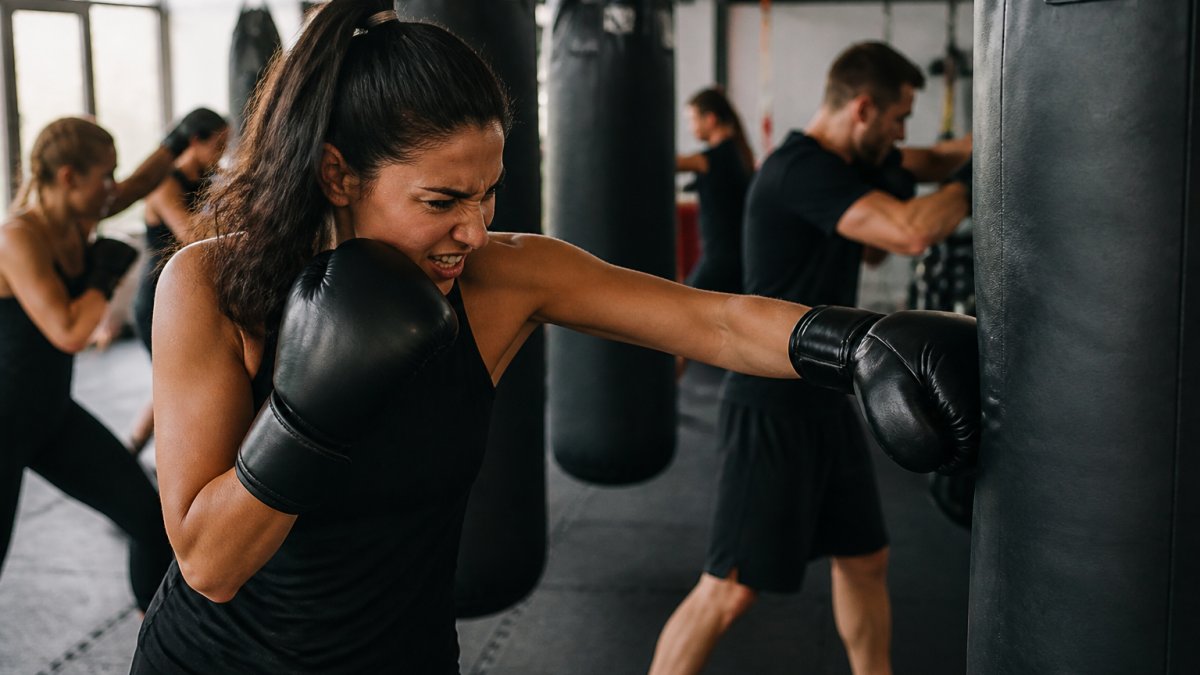
Kickboxing for stress relief works because it combines hard physical effort with a clear target. You hit something real, you sweat, and the tension leaves your body.
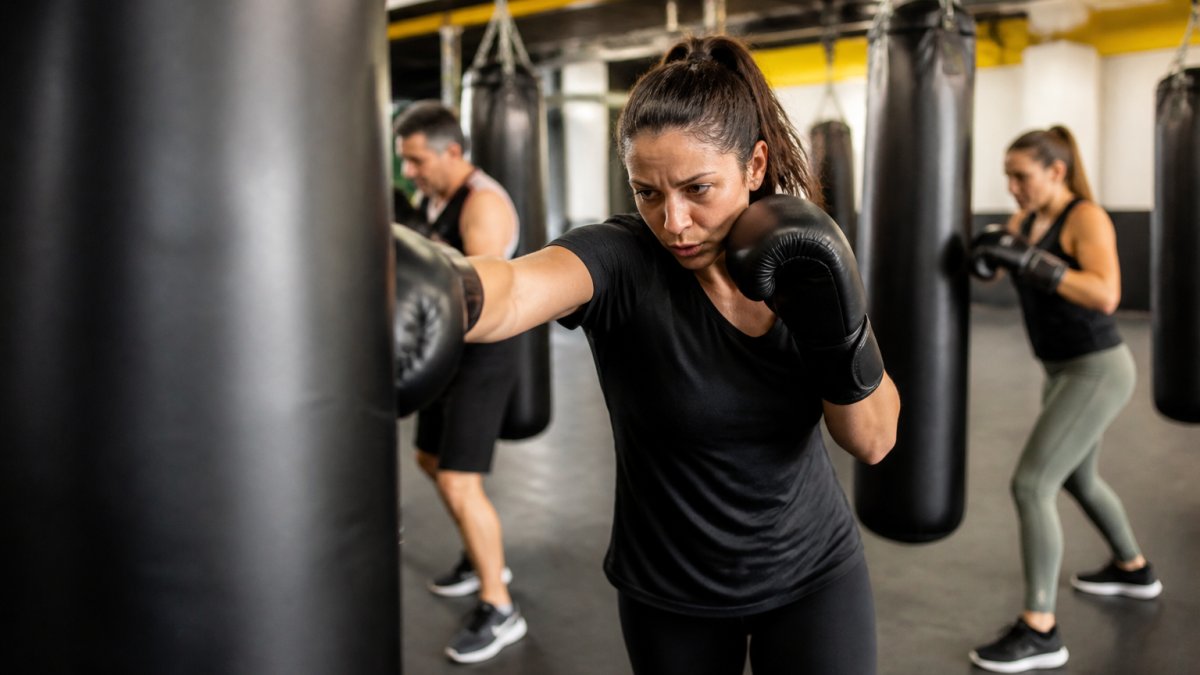
There is something honest about a heavy bag. It does not judge. You throw everything you have at it, and it stays right there for more.
At CKO Kickboxing, our classes use real heavy bags, not air. That matters.
You do not need experience. A common worry is standing there confused while everyone else knows what to do.
Matching Techniques to the Cause and Setting of Your Stress
The right technique depends on where you are and what set you off. A breathing drill will not fix a problem that needs a hard conversation. Match the tool to the moment. Use this as a quick decision guide, not a rulebook. Persistent patterns of distress often signal that professional support is necessary, making it essential to find a therapist who can help you address the underlying causes of your recurring tension.
By Setting
- At your desk, can't leave: slow exhalation and grounding. Both are silent and invisible to coworkers.
- In a meeting or public place: counting breaths and a discreet jaw release. No equipment, no visible movement.
- In the car: box breathing at a red light, then a two-minute shoulder and neck stretch once parked.
- At home with family around: a short walk outdoors or a few minutes alone in another room.
By Cause
- Angry or wound up: hard exercise or hitting a bag. Physical effort burns off the arousal faster than sitting still.
- Can't focus or mind racing: a quick walk outdoors or sunlight, then grounding.
- Wound tight physically: stretching or a hand massage.
- Lonely or isolated: call a friend or lean on your support network. Connection is the technique here.
- Overloaded by tasks: pick one small next step and write it down. Control beats calm when the problem is a to-do list.
If You Have Limited Mobility, Privacy, or Time
Not every quick technique requires a walk or a quiet room. Seated options work: slow exhalation, counting breaths, a seated shoulder roll, and a hand massage under a desk. If you cannot step away, choose the techniques that need no space and no sound. If you have only a minute, use the exhale-only version from the five-minute plan.
A Note on Evidence and Expectations
Techniques like slow breathing, muscle relaxation, and meditation are well studied, and a meta-analysis on stress-management interventions found benefits in highly stressed groups. But results vary by person, and that does not guarantee the same effect for everyone. Treat these tools as reliable helpers, not magic switches. Personal preference matters too: if a technique feels wrong for you, try another from the list rather than forcing it.
Avoid These Short-Term Traps
Some quick fixes make stress worse over time. Watch for relying on alcohol, doomscrolling, or skipping meals to get through a hard day. These can feel like relief in the moment but add to the load later.
Music helps too. A few songs you love can shift your mood in minutes, and it counts as mental distraction when your mind is stuck. Keep a short playlist ready so you do not have to think about it when stress hits.
When Quick Techniques Do Not Help: What to Do Next
Quick fixes calm the body, but they do not solve ongoing stress.
First, check your basics. Sleep, a balanced diet of whole foods, and time outdoors all affect how stress hits you.
Second, build a steady outlet. Our member stories show what that looks like over time for real people who train with us.
Third, know when to get help. If stress is affecting your sleep, appetite, or daily life for weeks, talk to a qualified professional. That is not weakness. It is smart self-care.
Book Your Free Kickboxing Class
Stress will keep showing up. The question is whether you have a place to put it.
At CKO Kickboxing, we built a studio for exactly that. Real heavy bags give you something to hit. Energizing music and lighting keep you moving.
You can move at your own pace, whether you are brand new or back after a break. Read our story. Ready to try it? Find a location near you and book your free class.
Get started with CKO Kickboxing and give your stress somewhere to go.
Frequently Asked Questions
How do you deal with extreme stress immediately?
Start with your breath and your body. Take a slow breath in through your nose and make the exhale twice as long, repeating for about a minute. Then unclench your jaw, drop your shoulders, and press your feet into the floor. A short burst of movement, like a quick walk or a few minutes of stretching, can burn off some of the stress response. If the feeling does not ease, step away from the situation and reach out to someone you trust rather than pushing through alone.
Which breathing exercises can help you calm down quickly?
Slow exhalation is the simplest option: inhale for a count of four and exhale for a count of six to eight, repeating for one to two minutes. Counting breaths also works well because it gives your mind a simple task. Box breathing, where you inhale, hold, exhale, and hold for equal counts, is another option. The key is a longer exhale than inhale, which helps shift your body out of the stress response. Practice when you are calm so the pattern feels automatic under pressure.
Can exercise or kickboxing help relieve stress?
Physical activity is one of the most reliable ways to relieve stress because it uses up the energy your body has already mobilized. A quick walk or moderate exercise can clear your head within minutes. Kickboxing adds a focused outlet: hitting a heavy bag gives your arms and legs something concrete to do with the tension. Research on stress management interventions supports movement as part of a broader approach. The best option is the one you will actually repeat, which is why a class you enjoy can beat a solo routine.
What should you do when quick stress-relief techniques are not enough?
If breathing, movement, and a short break do not take the edge off, treat that as information rather than failure. Step away from the source of stress if you can, call someone in your support network, and give yourself more than five minutes. Persistent or intense stress that interferes with sleep, work, or daily life is worth discussing with a qualified health professional. Quick techniques are a first line of action, not a substitute for ongoing support when stress keeps returning.
