CKO Bayonne
Can You Do Kickboxing at Your Own Pace? Yes, Here's How
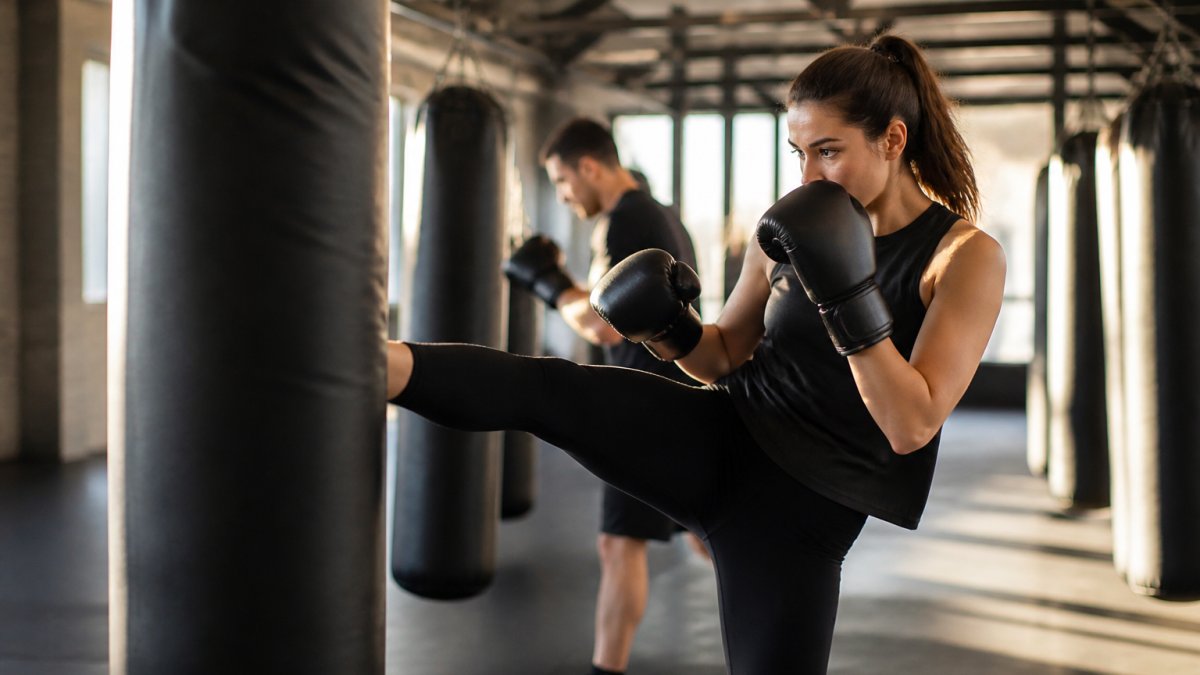
Last Updated: November 1, 2026
Quick Summary
Yes, you can do kickboxing at your own pace. You scale each session to your body, schedule, and fitness level by adjusting round length, rest length, and effort level one at a time. Beginners should start with 20 to 30 minute sessions two to three times per week.
- A beginner kickboxing workout lasts about 30 to 45 minutes and mixes warm-up, technique, bag rounds, and cooldown.
- Beginners should train two to three times per week and add a third session only once two feel comfortable.
- Change only one dial at a time: round length, rest length, or effort level.
- A well-paced session leaves you worked, not flattened, with mild soreness the next day.
- Film one round a week and book a coach or remote review when a correction stalls.
Table of Contents
- Yes, You Can Do Kickboxing at Your Own Pace
- What a Beginner Kickboxing Workout Looks Like
- How to Adapt a Low-Impact Kickboxing Workout to Your Body
- How Often Should Beginners Do Kickboxing?
- Kickboxing Workout Duration for Beginners
- Training Solo vs. Coached Classes: Getting Technique Feedback
- Safety, Injury Prevention, and When to Stop
- Book Your Free Class and Set Your Own Pace
- Frequently Asked Questions
Yes, You Can Do Kickboxing at Your Own Pace
Yes, you can do kickboxing at your own pace. Embracing this personal rhythm allows you to focus on your own progress while discovering how group fitness benefits your comfort in shared spaces.
Our answer is simple: you set the tempo, and the structure of each class supports you. You can see the kickboxing classes and book your first class today.
Below, we'll show you how to start, how long to train, and how to tell when to push and when to back off.
What a Beginner Kickboxing Workout Looks Like
A beginner kickboxing workout is a mix of warm-up, technique work, cardio rounds on a heavy bag, and a cooldown. It lasts about 30 to 45 minutes at first.
Here is the basic shape of a session:
- Warm-up (5-10 minutes): light movement to raise your heart rate
- Technique practice (5-10 minutes): slow punches, kicks, and footwork
- Bag or shadowboxing rounds (10-20 minutes): work and rest intervals
- Cooldown and stretching (5-10 minutes): lower the heart rate, loosen up
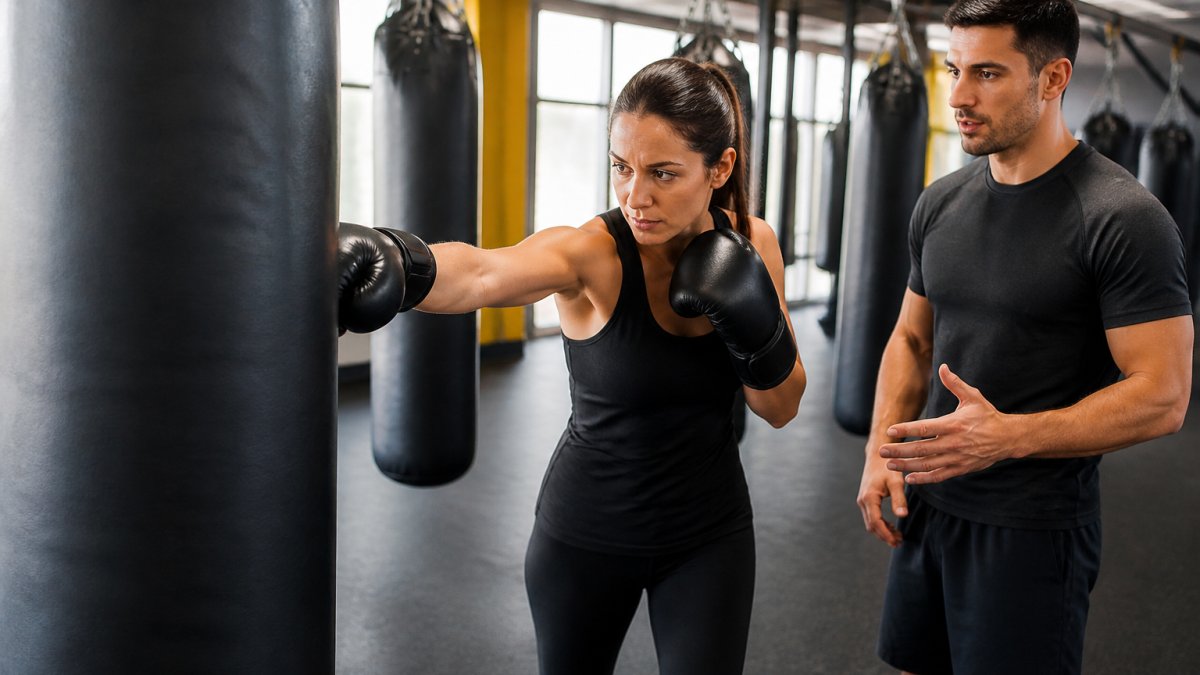
The Warm-Up and Cooldown You Should Never Skip
The warm-up is where many people cut corners, and it is worth taking seriously. Cold muscles and stiff joints do not take kindly to fast kicks.
Start with two or three minutes of easy movement: marching in place, arm circles, gentle torso twists. Then add dynamic stretches like leg swings and walking lunges. Save the long static holds for the cooldown.
The cooldown matters just as much. Walk it off for a few minutes, then stretch your hips, calves, shoulders, and chest.
How to Adapt a Low-Impact Kickboxing Workout to Your Body
A low-impact kickboxing workout keeps the punches and movement but removes the jumping, deep lunges, and fast direction changes. You still get cardio and conditioning. You just protect your knees and joints while you build strength.
This version can suit anyone returning to fitness or carrying a few extra pounds. The goal is to finish the session feeling worked, not wrecked.
- Keep both feet closer to the ground on kicks
- Throw punches at chest height instead of full extension
- Shorten each round and lengthen the rest interval
Adjusting Punches, Kicks, and Stance for Comfort
Your stance is the base for everything. Stand with one foot forward, knees soft, hands up in guard.
For punches, start with the jab and cross. Keep your elbows soft and stop the punch before your arm locks out.
For kicks, begin with low front kicks and side kicks. Height is not the goal at first. Control is.
How Often Should Beginners Do Kickboxing?
Beginners should do kickboxing two to three times per week. That gives your muscles time to recover between sessions. Rest days are when your body actually gets stronger, so do not skip them.
Start with two sessions. Once those feel comfortable for a couple of weeks, add a third. Many people find that a mix of bag work, bodyweight exercise, and light cardio on off days keeps momentum without overtaxing the joints.
Kickboxing Workout Duration for Beginners
Kickboxing workout duration for beginners should start at 20 to 30 minutes, then build toward 45 to 60 minutes over several weeks. Short, consistent sessions beat long, exhausting ones you dread.
But duration is only half the pacing equation. The other half is how hard you work inside each round and how much you rest between them.
The Three Dials You Can Turn
Every self-paced kickboxing session has three adjustable dials. Change one at a time, not all three at once.
- Round length, how long each work interval lasts
- Rest length, how long you recover between rounds
- Effort level, how hard you throw inside a round
A common beginner mistake is turning all three dials up in the same week. Instead, pick one. If you want longer rounds, keep the rest and effort the same. If you want shorter rest, keep the round length and effort the same.
A Simple Progression Table
| Week | Session Length | Rounds | Rest Between Rounds | Effort Level |
|---|---|---|---|---|
| 1-2 | 20-25 minutes | 3-4 | 90 seconds | Easy, you can talk in short sentences |
| 3-4 | 30 minutes | 5-6 | 60-90 seconds | Moderate, breathing hard but controlled |
| 5-6 | 35-40 minutes | 6-8 | 60 seconds | Moderate-hard, short phrases only |
| 7+ | 45-60 minutes | 8-10 | 45-60 seconds | Hard, but form stays clean |
Use a timer so you are not guessing. Work hard for the round, then truly rest. Gradually increase the work and shrink the rest as your endurance improves.
How to Tell If You Are Pacing Correctly
A well-paced beginner session should leave you feeling worked, not flattened. Here is a simple check:
- During the round: you can throw controlled punches and kicks without your form falling apart in the last 10 seconds.
- During rest: your breathing settles enough to speak a full sentence before the next round starts.
- The next day: you feel mild soreness, not sharp pain or exhaustion that keeps you from normal activity.
If you fail any of those checks, turn one dial down, usually effort first, then round length, then rest.
When to Add Time vs. When to Add Intensity
Add time when your current sessions feel comfortable and your form stays clean through the final round. Add intensity only after you can complete the full session at moderate effort without your technique breaking down. Most beginners should spend four to six weeks adding time before they chase harder rounds.
Scaling Down on Low-Energy Days
Self-paced means you are allowed to have an off day. If you slept poorly or your joints feel stiff, cut the session to 15 minutes, keep the rounds short, and extend the rest. A short session you finish beats a long session you abandon. Consistency over weeks matters far more than any single workout.
Training Solo vs. Coached Classes: Getting Technique Feedback
Solo training is flexible and often free, but nobody is there to correct your form.
Coached classes can help with that. An instructor can watch your stance, your footwork, and your combinations, and suggest adjustments.
The middle path works well too. Train at home with shadowboxing and bodyweight drills, then take a class each week to check your technique. If you prefer a group format, you can explore the group fitness classes available.
What You Can Learn Solo, and What You Cannot
Solo training can build a lot of kickboxing fundamentals. You can build cardio, learn basic combinations, improve footwork, and develop rhythm on your own. Shadowboxing in front of a mirror is a useful tool for a beginner.
A useful rule: solo training builds the engine, coached training tunes the mechanics. You need both eventually, but you can start solo and add coaching once you have a base.
How to Get Technique Feedback Without a Coach in the Room
You do not need a live instructor to catch most form errors. These methods work well for self-paced learners:
- Film yourself. Set your phone on a tripod or lean it against a bag and record one round from the front and one from the side. Watch it back at half speed. You will spot a dropped guard or a locked elbow faster than you expect.
- Use a form checklist. Before each session, pick one thing to check, guard height, hip rotation, breathing, stance width. Review it in your video after the session.
- Try online coaching. Some instructors offer remote form reviews where you upload a short clip for feedback. Check with individual providers for their offerings and pricing.
A Simple Self-Review Checklist
After each solo session, run through these five questions while the round is fresh:
- Did my guard stay up through the whole round, or did it drop when I got tired?
- Did my punches snap back to guard, or did my arm linger extended?
- Did my kicks come from hip rotation, or did I just swing my leg?
- Did I breathe out on strikes, or did I hold my breath?
- Did my stance stay balanced, or did I lean and lose footing?
If you answer "no" to two or more, that is your focus for the next session. One correction at a time is enough.
When to Bring in a Coach
Book a coached session or a remote form review when:
- You have practiced a technique for several weeks and it still feels awkward
- You notice joint pain that does not come from soreness
- You want to add power or speed and are not sure your mechanics can handle it
A single coached session every few weeks can be enough to keep a self-paced practice on track. You do not have to choose between solo and coached, you can use coaching as a periodic tune-up rather than a weekly commitment.
Safety, Injury Prevention, and When to Stop
Many kickboxing injuries are linked to doing too much too soon.
Watch out: sharp joint pain, dizziness, or chest tightness are signals to stop immediately, not push through. Sore muscles are normal. Pain that lingers or worsens is not.
Listening to your body is the whole point of self-paced training. Our member stories share experiences from people who have trained with us.
Book Your Free Class and Set Your Own Pace
The hardest part of kickboxing is walking through the door the first time. After that, you control the speed.
At CKO Kickboxing, you can train with real heavy bags, energizing music, and a supportive community. Our classes let you move at your own pace, whether you are new to fitness or returning after time away.
Ready to try it? Find the CKO Kickboxing studio nearest you and book your free trial class today.
Frequently Asked Questions
Can beginners do kickboxing at their own pace?
Yes. A good beginner program lets you control the intensity, whether you are in a class or working out at home. You can slow the tempo, shorten rounds, or swap high-impact moves for low-impact versions. The key is to start where you are and gradually increase as your fitness improves.
How often should a beginner do kickboxing?
Most beginners do well with two to three sessions per week, spaced out so your body has time to recover. Start with two and see how you feel before adding a third. A beginner kickboxing workout does not need to be long or intense to be effective. If you are sore or tired, take an extra rest day. Consistency over weeks matters more than cramming sessions into a short window.
How long should a beginner kickboxing workout last?
A kickboxing workout duration for beginners of 20 to 30 minutes is a solid starting point, including a warm-up and cooldown. As your endurance builds, you can extend sessions to 40 or 45 minutes. Shorter, focused rounds with a timer help you stay in control. If you are doing a coached class, tell the instructor you are new so they can help you pace the session.
Can I do kickboxing at home without equipment?
Yes. Shadowboxing, bodyweight exercises, and footwork drills need no equipment at all. If you want bag work, a heavy bag adds resistance and feedback, but it is not required to start. Focus on form first: stance, guard, and controlled punches and kicks. A timer helps you structure rounds. When you are ready for more, a gym with real heavy bags gives you the feel of landing full-power strikes.
