CKO Bayonne
How can beginners start kickboxing safely and effectively?
Last Updated: October 26, 2026
Quick Summary
To start kickboxing beginners should take 2-3 classes per week, learn fundamental stance and guard first, and invest in boxing gloves and hand wraps before their first session. You can move at your own pace and don't need prior experience, as instructors scale movements to your fitness level.
- A five-week kickboxing study found measurable improvements in physical fitness across diverse participants including beginners.
- Essential startup gear costs roughly $50-$115 for gloves and wraps; many studios provide loaner equipment for trial classes.
- Week one focuses on stance, guard, jab, and cross with 2-3 classes and 10 minutes of shadowboxing on two non-class days.
- By month one you should complete a full class without stopping and throw jab-cross-hook with hands returning to guard.
- Tell your instructor about existing injuries before class so they can suggest safe modifications.
Table of Contents
- Why Kickboxing Is an Ideal Starting Point for Beginners
- What to Expect at Your First Kickboxing Class
- Kickboxing Gear for Beginners: What You Actually Need
- Master Beginner Kickboxing Techniques: Stance, Guard, and Basic Moves
- How to Practice Kickboxing at Home
- Your First Month: A Realistic Training Plan
- Beginner Safety and Injury Prevention in Kickboxing
- Book Your Free Class and Start Your Kickboxing Journey
- Frequently Asked Questions
Why Kickboxing Is an Ideal Starting Point for Beginners
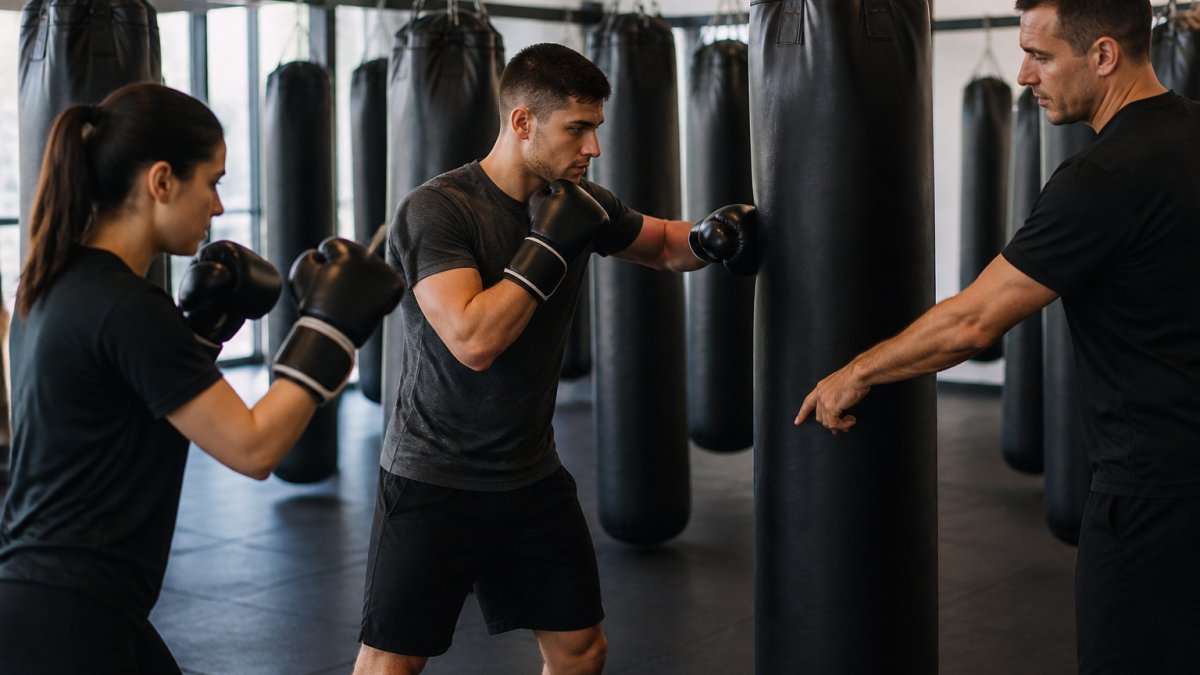
When you start kickboxing, it combines cardio and strength training into one high-energy workout. CKO Kickboxing features real heavy bags and encourages you to work at your own pace.
A randomized study examining five weeks of kickboxing training found measurable improvements in physical fitness across diverse participants, including those new to the sport research on kickboxing training effects. The beauty of kickboxing for beginners is that you don't need prior experience. The instructor scales movements to your fitness level, and you control the intensity.
CKO Kickboxing features real heavy bags, motivating music, and a supportive community.
Kickboxing classes combine cardio and strength training. CKO Kickboxing describes its classes as a way to help you feel better and relieve stress at your own pace.
What to Expect at Your First Kickboxing Class
Walking into your first kickboxing class can bring a mix of excitement and nerves.
CKO Kickboxing features real heavy bags, and you can move at your own pace.
CKO Kickboxing welcomes all fitness levels and describes its community as supportive.
Kickboxing Gear for Beginners: What You Actually Need
You can walk into a beginner class with very little. Here's what's essential, what your gym likely provides, and what you can delay buying, with realistic U.S. price ranges.
KICKBOXING FUNDAMENTALS: Basic Kickboxing Techniques To Get You Started
Martial Arts Unlimited
Essential gear (buy before or at your first class):
- Boxing gloves. Protect your hands and wrists. Beginners typically start with 12-16 oz gloves; heavier gloves are easier on joints and better for bag work, while lighter gloves suit faster combinations. Expect to pay roughly $40-$100 for a solid beginner pair. Avoid the cheapest $20 department-store gloves, which often lack wrist support and padding.
- Hand wraps. Wrap your hands before gloves to stabilize wrists and knuckles. Buy cotton wraps about 120 inches long; a two-pack usually runs $8-$15. Learn one reliable wrap method before class.
- Workout clothes. Wear whatever lets you move freely: shorts or leggings and a t-shirt. Avoid baggy clothes that catch on equipment or restrict kicks.
- Shoes. Supportive cross-training shoes with good lateral stability work well; running shoes can feel unstable during pivots.
Nice to have but not essential at the start:
- Shin guards. Studios often have loaners. Buy your own ($30-$70) once you are sparring or doing heavy kick work regularly.
- Kickboxing-specific gloves. Regular boxing gloves work fine to start; specialty gloves are a later upgrade.
- Mouthguard. Required only if your gym includes controlled sparring; many beginner classes do not. A boil-and-bite guard runs $10-$30.
- A gym bag. Any bag works.
What gyms commonly provide: Many studios supply loaner gloves and wraps for trial classes, and some provide shin guards for partner drills. Always ask before buying.
Realistic startup budget: A bare-bones kit (gloves plus wraps) can be done for roughly $50-$115. Adding shoes and shin guards pushes a fuller setup to roughly $100-$200. You do not need to spend more than that to begin.
When to buy versus borrow: Borrow for your first one or two classes. Buy gloves and wraps once you've decided to continue, since fit and wrist support matter. Delay shin guards and a mouthguard until your gym confirms whether sparring is part of the beginner pathway.
Master Beginner Kickboxing Techniques: Stance, Guard, and Basic Moves
Learning proper form prevents injury and builds confidence. These fundamentals form the foundation for everything you'll do in class.
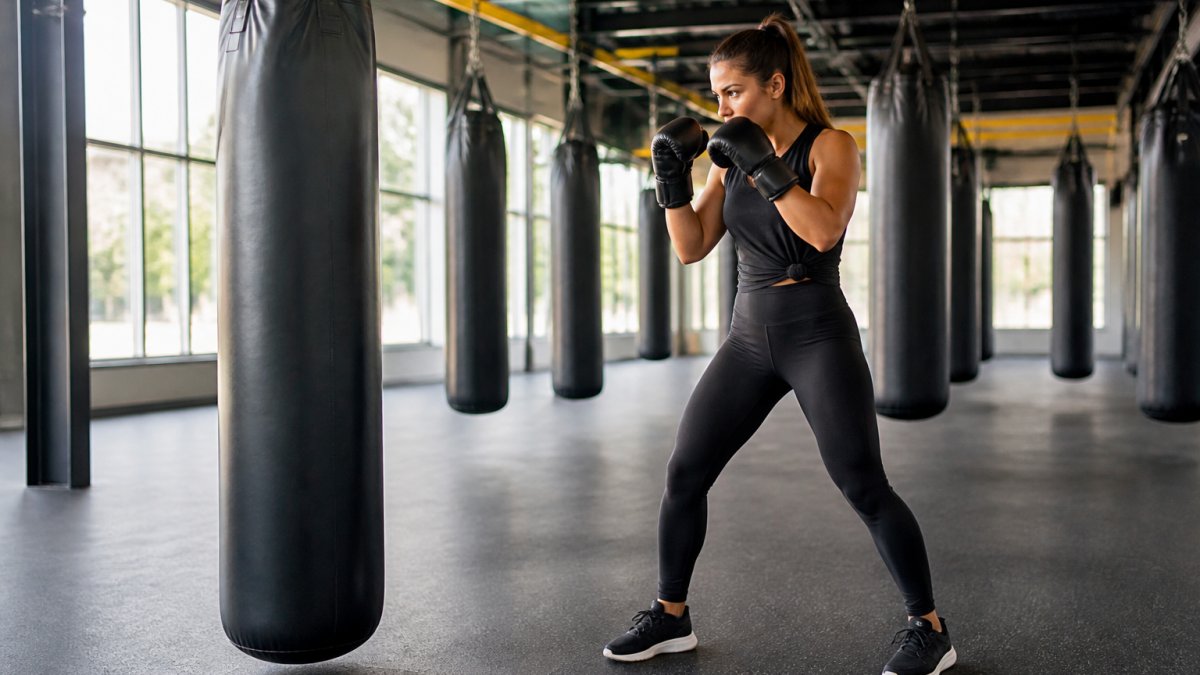
The Fighter Stance and Guard
Keep your chin down slightly, relax your shoulders, and breathe steadily. Tension burns energy, and many beginners hold their breath, reducing endurance.
Fundamental Punches: Jab and Cross
Practice the jab-cross combination slowly first. Speed comes later. Focus on form: straight lines, quick returns to guard, smooth transitions.
Basic Kicks: Roundhouse and Front Kick
Kicks take practice. Your balance improves with repetition. Don't rush the learning curve. Instructors will correct your form and help you build the muscle memory.
How to Practice Kickboxing at Home
Home practice supplements class rather than replacing it. The heavy bag, music, community, and instructor feedback matter, but working out at home keeps your body ready between classes.
Your First Month: A Realistic Training Plan
Week 1, Learn the fundamentals. Take 2-3 classes with at least one rest day between sessions. Focus on stance, guard, the jab, and the cross. Do not worry about speed or power. Ask the instructor one question after each class. Practice goal: 10 minutes of shadowboxing on two non-class days, focusing only on stance and guard.
| Week | Classes | Home Sessions | Focus | Practice Goal |
|---|---|---|---|---|
| 1 | 2-3 | 2 (10 min each) | Learn fundamentals | Stance and guard only |
| 2 | 2-3 | 2 shadowbox + 1 bodyweight | Build consistency | Jab-cross and jab-cross-hook |
| 3 | 3 | 2 shadowbox + 1 jump rope | Develop flow | Add roundhouse and front kick |
| 4 | 3 | 2 shadowbox + 1 bodyweight + 1 jump rope | Build endurance | Hands-up and knee tracking |
When to adjust:
Beginner Safety and Injury Prevention in Kickboxing
If you have existing injuries or health concerns, tell the instructor before class. They'll suggest modifications that keep you safe while you build strength.
Book Your Free Class and Start Your Kickboxing Journey
The first step is simple: book a kickboxing class.
CKO Kickboxing features real heavy bags, energizing music, and a supportive community. You can move at your own pace.
Find a CKO Kickboxing location near you to see where you can start. You can book a free class and work at your own pace.
Frequently Asked Questions
Can I teach myself kickboxing at home as a complete beginner?
Yes, you can learn basic kickboxing techniques at home using online videos and shadow boxing, but having an instructor watch your form is invaluable. A qualified instructor catches bad habits early, prevents injury, and ensures you're building proper technique from day one. Many beginners benefit from at least a few in-person classes to establish correct stance and footwork before practicing at home.
What gear do beginners need for kickboxing?
At minimum, you need boxing gloves (12-16 ounces for beginners), hand wraps to support your wrists, and comfortable athletic clothing with good ankle support. Most kickboxing studios provide heavy bags, so you don't need to buy one to start. A good pair of cross-training shoes helps with footwork and balance during kicks. Check with your studio about what they provide versus what you should bring.
How quickly will I see results from kickboxing?
Most beginners notice improved energy and reduced stress after 2-3 classes. Fitness improvements like better endurance and strength typically appear within 3-4 weeks of consistent training. Weight loss depends on your diet and training frequency, but kickboxing burns significant calories, a high-intensity class can burn 400-600 calories. Progress comes from consistency and training at your own pace rather than pushing too hard too soon.
Is kickboxing harder than regular boxing for beginners?
Kickboxing adds leg techniques to boxing fundamentals, so it engages more muscle groups and requires learning footwork adjustments for kicks. However, beginners can start with punching combinations and add kicks gradually as they build strength and balance. The learning curve is slightly steeper, but fitness kickboxing classes are designed to let you progress at your own pace, making it accessible for all fitness levels.
Your first month matters. Consistency beats intensity. Show up, stay coachable, and trust the process. According to research on kickboxing training effects from the National Library of Medicine, measurable fitness improvements happen within weeks. You'll feel them. You'll see them. And you'll understand why kickboxing has become the workout people actually want to do.
